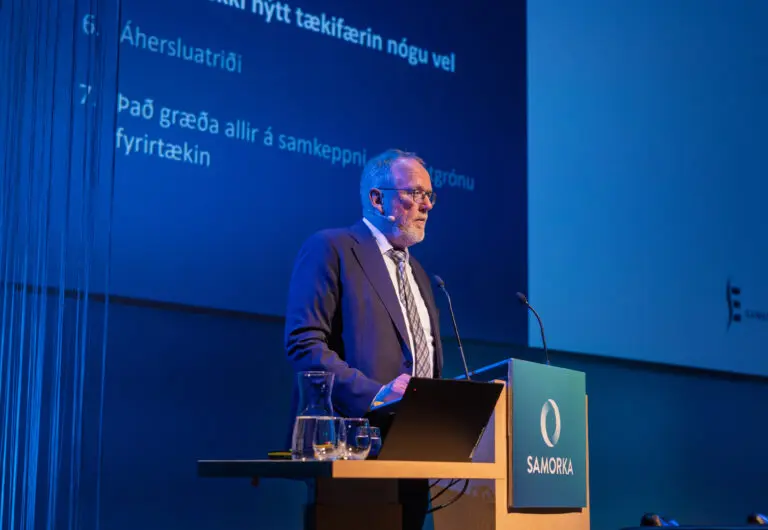
By Val Þráinsson
The design of tenders and the monitoring of effective competition among participants have a significant impact on the terms the public sector secures in its procurement. Public procurement amounts to large sums each year, so there is much at stake for the Exchequer and taxpayers in securing the best possible terms.
To put the scale of public procurement in Iceland into context, it amounted to 16.51% of gross domestic product in 2021, compared with an average of 12.9% in OECD countries (OECD, 2023, Government at a Glance 2023: Iceland). The above-mentioned figure corresponds to public procurement in this country amounting to approximately 700 million euros in 2023. If it were possible to reduce these expenditures by just 11% through better tendering and more robust oversight, it could save the state around 7 billion króna annually. Those funds could, for example, be used to improve services or reduce taxes.
Create a better tender
The design of tendering and procurement processes has a direct impact on the behaviour of participants. If, for example, tenders are too frequent, transparency between competitors is too high, or barriers to entry are high, it can reduce the incentive for companies to offer the most favourable prices.
A recent study by Fazekas and Blum (2024) shows that centralised tendering and framework agreements have led to price reductions of up to 50% in various countries. Mexico is a good example of this. In 2007, the government changed the tendering processes in the pharmaceutical market by opening them up to foreign suppliers and reducing the frequency of procurement. This had the effect of allowing more parties to participate in the tenders and bid for larger quantities in each one. It is believed that the changes led to a reduction in collusion and that prices for 18 of the 20 most important products fell by 20% on average (OECD, 2011, Competition and Procurement).
Due to the significant impact that the design of tender and procurement processes has on the public sector's choices, there is an urgent need for the state and local authorities to review and improve their procurement.
Consultation is expensive – and competition oversight must be increased.
Tender-related collusion is like any other collusion between competitors, where competitors agree to raise prices jointly instead of competing to offer the lowest prices. The offences can, for example, consist of price-fixing or the division of markets between competitors. The consequence is that the public sector pays too high a price for goods and services – and society loses out.
In a summary in the Competition Authority's report no. 1/2021, The positive effects of competition on living standards and prosperity, it is noted that mark-ups due to collusion are often around and above 20–30%. Here, for example, one can look to consultative of the oil companies from 1993-2001, where they had extensive consultation with each other on the making of bids in connection with formal tenders or price enquiries from their clients. Those who were affected by this included the City of Reykjavík, the Coast Guard and Icelandair.
At the same time as the volume of public procurement has increased, the Competition Authority has not had sufficient operational capacity to undertake investigations into whether competition law has been complied with by bidders in tenders. For example, the competition authority's budget has decreased by 20% in real terms over the last decade, while the scale of economic activity has increased by 35-40%. Furthermore, staffing levels at the end of last year were similar to those in 2007, while at the same time the number of companies in the market has increased by over 65%.If the government wants to save money by preventing collusion in tenders, part of the solution is to increase funding for the regulator.
Follow the OECD's recommendations
In a recent OECD report from 2023, Combating bid-rigging in public procurement, proposals are put forward on how to prevent collusion in public tenders. In summary, the main messages are as follows:
The government should review the implementation and legislation on public procurement.
Tender procedures are designed in such a way that communication between participants is restricted.
· Good cooperation between competition authorities and public procurement bodies.
· To utilise leniency policies, anonymous whistleblower protection and digital screening methods to detect collusion.[1]
The OECD's recommendations are clear and simple to implement, and it is important to follow them up.
A lot to gain
Public procurement is of great importance to the finances of national and local government, but as noted above, public procurement in this country amounted to 16.51% of gross domestic product in 2021. By promoting better tender design, increasing competition between suppliers, strengthening collaboration between regulators, enhancing cooperation between regulators and procurement authorities, and incentivising companies to disclose collusion, the public sector can economise and maximise the use of public funds. The sums of money are significant, as for every 1% the public sector saves on procurement, the efficiency gain amounts to around 7 billion króna per year. It is therefore clear that with the right measures, there is a great deal at stake for the state and taxpayers – and no reason to wait.
The Competition Authority has brought these and other viewpoints to the attention of the new government, see. answer the supervisory authority's request for suggestions for improvement, 27 January 2025.
The article First appeared in the Business Journal Thursday, 27 February 2025.
The author is the Chief Economist of the Competition Authority.
"*" indicates required fields