From the customers' perspective, it is an absolute minimum requirement that the reduction in fuel prices by the oil companies fully matches the reduction in the official taxes. Furthermore, it is crucial that the reduction is realised over a longer period. Consumers and other customers of the oil companies are urged to remain vigilant and monitor that the reduction is passed on to them. They can do this, for example, by choosing to do business with those companies that pass the full reduction on to their fuel prices.
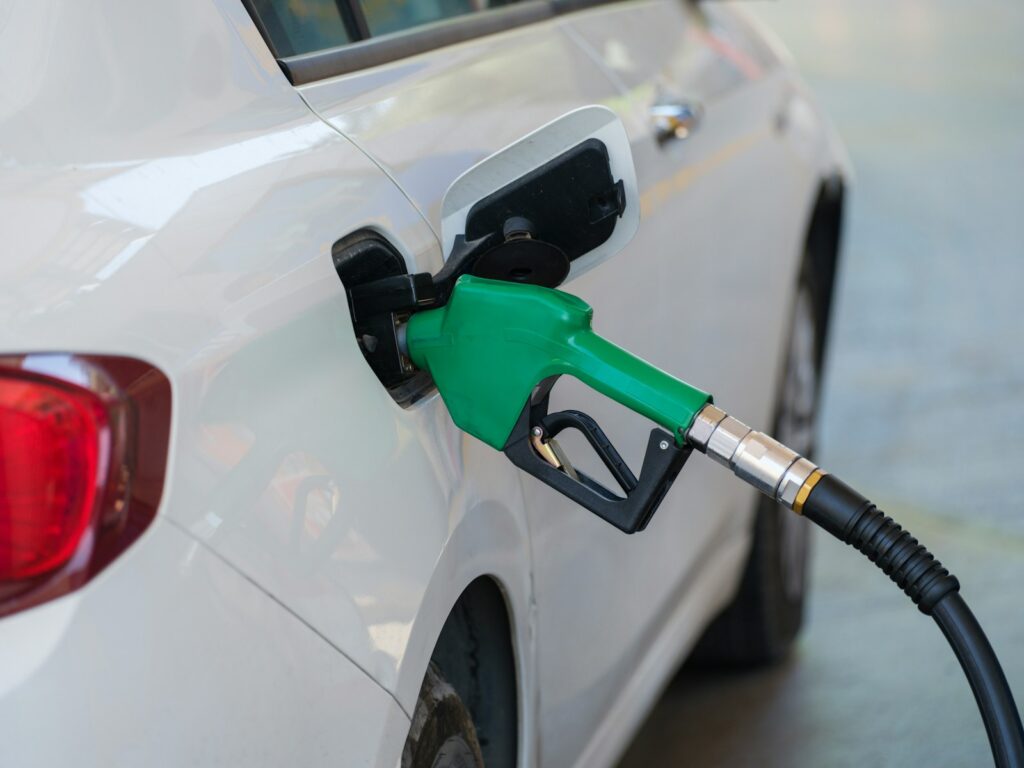
On 18 December, the Althingi passed a law on a kilometre charge for vehicles, introducing a new revenue-raising system for vehicles and fuel. At the same time, fuel duties and excise duties on petrol are abolished, along with the oil levy, while the carbon fee is increased. It is expected that the price of fuel from the oil companies could fall significantly, by an amount equivalent to 30-35 per cent. The changes will take effect from 1 January 2026.
In its reviews of the bill that became the law on the kilometre charge, the Competition Authority has drawn attention to the oligopolistic conditions in the fuel market and to indications that competition in the sale of fuel is limited. In those circumstances, „It is unwise for the government to assume that a reduction in fuel duties will be passed on in its entirety as a lower price for fuel to consumers.
The majority report of the Economic and Commercial Committee emphasises the importance of the price monitoring of the ASÍ and FÍB closely monitoring the retail price of fuel, and the Competition Authority closely monitoring developments in competition in the fuel market. Furthermore, the majority urges the Minister of Finance to work wholeheartedly to ensure that consumers are kept informed about developments in fuel prices. The Minister is also instructed to inform the Althingi of the cooperation with these parties at the Autumn Session of 2026.
The oil companies' response to the changes over the New Year period is a litmus test for competition in the fuel market. In a genuinely competitive environment, changes of this kind can create disruption and opportunities for competitors to gain market share through price competition. From the customers' perspective, it is an absolute minimum requirement that the reduction upon the changes' implementation fully corresponds to the reduction in the official charges. Furthermore, it is crucial that the reduction is realised over a longer period. For example, customers should not have to accept it if competitors in the market have increased their charges since they became aware that the changes were forthcoming. It would also be unacceptable if mark-ups were to increase following the changes without any objective justification. There is a real risk that customers' price awareness will be diminished in the wake of the changes, which could create an opportunity for prices to be increased.
The Competition Authority also urges consumers and other customers of the oil companies to be vigilant and monitor that the price reduction is passed on to them. They can do this, for example, by taking their custom to those companies that pass the full reduction on to the price of fuel.
In accordance with the recommendations of the majority of the Economic and Commercial Committee and the Minister of Finance and Economic Affairs, the Competition Authority will be in contact with ASÍ, FÍB and the Consumer Association regarding the aforementioned changes. Furthermore, the Authority will seek information from the Minister of Finance and Economic Affairs on how he intends to ensure that consumers are informed about developments in fuel prices, in accordance with the committee's majority opinion. Furthermore, the Competition Authority will obtain information and data from the oil companies, as appropriate, in order to assess the development of competition in the fuel market.
In submissions to the Economic and Commercial Committee, the Competition Authority has pointed out that its previous investigations into the fuel market indicate a lack of competition. In 2015, the authority published report on a market research in the fuel market, where it was found, among other things, that in the retail sale of vehicle fuel there were conditions for tacit coordination between the oil companies, i.e. that they took mutual account of each other with regard to, for example, pricing. As an indication of this, the high price and mark-up (excluding taxes and other public charges) in comparison with other countries was cited, despite taking market conditions and discounts into account. It was also noted that the price of motor fuel followed increases in the cost of purchase more closely than it did decreases. Reference was also made to the fact that the oil companies operated at all stages of the market and were therefore vertically integrated. They had the incentive and ability to exclude new competitors and deny them wholesale fuel or access to storage capacity.
In the report of the Competition Authority Since the publication of the previous report in 2020, there have been several changes in the fuel market (including the entry of Costco and easier access to storage and distribution), although it was not possible to state what their ultimate impact would be. It is clear that since 2020, some of the positive changes discussed in the report have not materialised. It should be noted that Festi's sale of Dælan to a new competitor, based on the conditions of the settlement regarding the merger of N1 and Festi, did not achieve the intended result, as the new competitor disappeared from the market in 2021. Furthermore, measures to facilitate the wholesale of fuel to potential new market entrants have not been successful. The competition barriers related to this are described in more detail in decision no. 28/2024. However, it was noted that access to fuel storage and distribution was easier than in 2015, and that Costco, which began selling fuel in 2017, was still operating.
In the Competition Authority's reviews of the bill on a kilometre charge, on the one hand at the last parliamentary session (Review dated 20 March 2025) and, on the other hand, in the current processing of the bill (Review (dated 24 October) drew attention to a lack of competition and indications of limited competition in the fuel market.
"*" indicates required fields