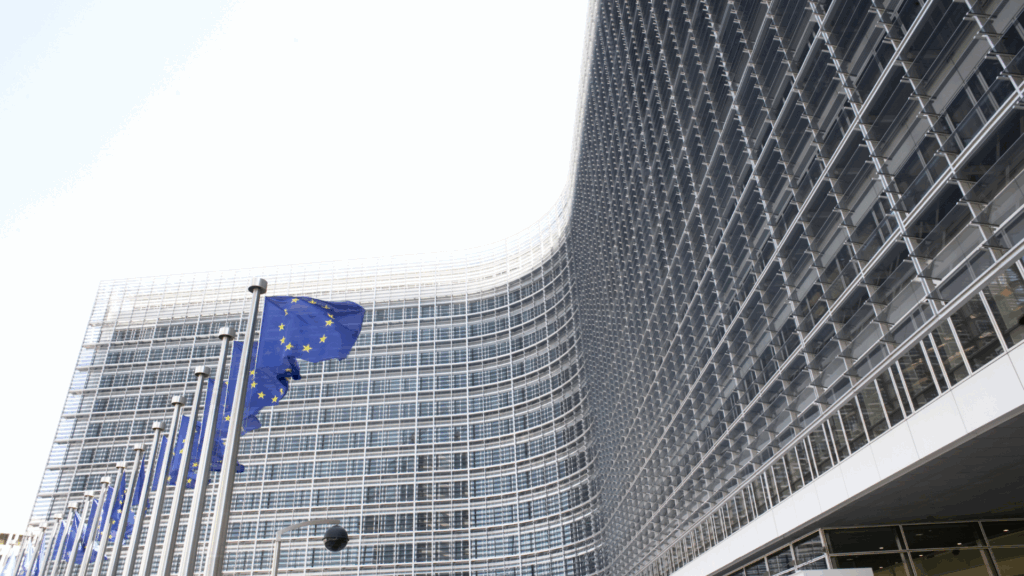
Recently, the European Commission's executive invalidated a purchase
Illumina at Grail. Illumina is a leading biotechnology company.
in the field of, among other things, cancer research, but Grail is a start-up company that
has developed a new technology for cancer screening. Both companies are American.
The Commission's decision is historic for many
partly to blame. Thus, this is the first time the EU Commission has annulled
a merger which was not reportable, where the turnover thresholds for such an obligation were
not fulfilled. The case also sheds light on the significance of competition law when
Start-up and innovative companies are involved, including in the healthcare sector.
Páll Gunnar Pálsson, Director-General of the Competition Authority:
„The Competition Authority
is an active participant in the close cooperation of European competition authorities. In this
We, along with several sister inspections, requested that the Executive Commission
The EU investigated a merger that was not reportable but could nevertheless have had harmful effects.
impact on the fight against cancer, including here in the country. The conclusion is that
that the EU has invalidated the takeover of a major biotechnology company on an important
start-up companies and thereby created the conditions for rapid development in the field
cancer screening“
The background to the matter is that in April last year, the
EU Commission request from the Competition Authority and five others
European competition authorities, on taking the Illumina and Grail merger to
treatment. These requests were sent despite the merger not being
required to notify in the relevant states where turnover thresholds are not met.
The Commission approved these requests and opened an investigation into the merger, but that
It was then in July of this year that the European Court of Justice confirmed the legality of these
request and investigation by the Commission.
The reason why the Competition Authority and others
Competition authorities asked the European Commission that the merger would be
investigated, is due to the possible negative effects of the merger
the biotechnology association could have and lead to, among other things, higher prices, reduced
quality, less innovation in important markets related to cancer screening.
The conclusion of the European Commission from last week is
that the merger has a negative effect on competition in the market for cancer screenings, but competition on
It is significant and will change how cancer screening is done.
future. Illumina possesses a certain technology that enables other companies, such as
Grail, impossible to operate without being in partnership with the company. By purchase
With Illumina's Grail, the company would have entered into direct competition in the field.
cancer screening, instead of primarily selling to such companies
Essential technology.
In the Commission's view, Illumina would be in that position.
to prevent Grail's competitors from having access to necessary
technology to be able to further develop its products. Therefore, the merger has, among other things
a negative effect on innovation in this important market. Then there were the conditions that
Illumina's contribution was not sufficient to offset the negative impact.
of the merger.
Although approval from the competition authorities was not yet available,
The companies decided to carry out the merger late last year. The merger has therefore
when a takeover takes place, without the permission of the competition authorities, but the merging parties are generally
Prohibited to carry out a merger while he is under treatment by
to the competition authorities. The merger must therefore be unwound, and it must be ensured
The independence of the Grail, once again.
This merger case is a good example of how
European competition authorities work closely together, and that mergers which have an impact here
on land, may be subject to investigation and inspection by the European Commission.
"*" indicates required fields