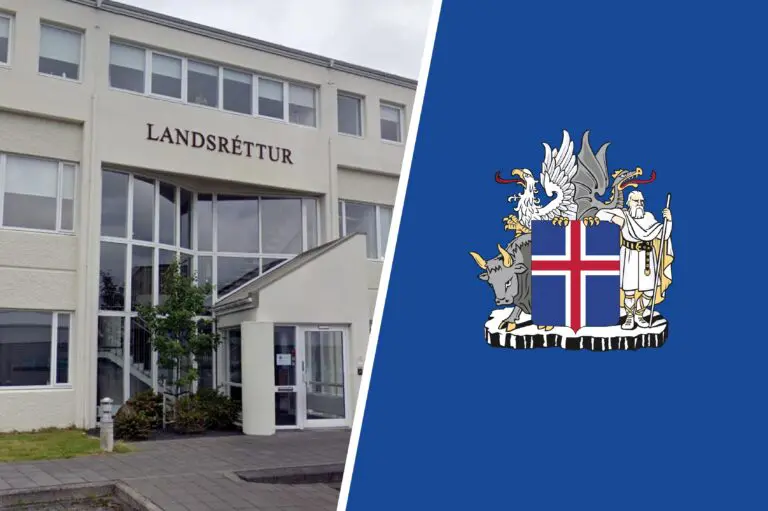
 Today, the Reykjavík District Court has delivered its judgment in the collusion case concerning the major oil companies. The background to the case is that on 28 October 2004, the Competition Council made a decision, concluding that Olís, Skeljungur and Olíufélagið had committed serious breaches of competition law. The Competition Council decided to impose substantial fines on the companies. The oil companies appealed the Competition Council's decision to the Competition Appeals Board, which delivered its ruling on 31 January 2005. With that ruling, the proceedings before the competition authorities concluded. The appeals board, in all material respects, upheld the Competition Council's findings on the infringements but reduced the fines, deeming it appropriate that they total 1.5 billion kr. Later in 2005, the oil companies appealed the appeal board's ruling to the district court, and its judgment is delivered today. The district court confirms that the oil companies had an illegal cartel and breached competition law, although it considers that the fines should be quashed for other reasons.
The oil companies' offences in question are the most extensive cartel offences ever uncovered in this country. The oil companies' organised infringement lasted continuously from at least 1993 until the end of 2001, and the Competition Council's decision details around 500 instances of collusion. In their submissions, the oil companies placed great emphasis on the fact that their collusion had diminished in the latter half of the collusion period. The Appeal Board, concurring with the Competition Council, found that this was not the case. The panel considered that the collusion had been much more serious, more organised and more frequent during the period 1996-2001 than during the period 1993-1995. The oil companies' collusion was broadly divided into three main categories:
To carry out this consultation, the oil companies had frequent and organised communications with each other. The oil companies' managers participated in meetings; for instance, the companies' chief executives frequently met to organise and make decisions on matters that were part of the illegal collusion. Messages and information concerning the collusion were also exchanged by email, telephone calls or fax. The companies were fully aware that this was illegal conduct, as the case file contained instructions for secrecy and the destruction of evidence.
The oil companies' collusion involved using illegal methods to maximise their profits at the expense of consumers and all the businesses that used petroleum products in their operations at the time. The appeal board's ruling details the significant illicit gains made by the oil companies from these offences and concludes that they were liable to cause considerable damage to society.
A Reykjavík District Court ruling today confirms that the oil companies engaged in illegal collusion, and the court points out that „collusion always leads to a benefit“. The district court refers to Supreme Court judgements in which victims of the oil companies' collusion have been awarded damages for the harm they suffered.
The district court's decision to nevertheless set aside the appeal board's ruling is based on the sole premise that the oil companies did not have adequate so-called 'right of reply' in their case due to the legal framework that was in force at the time their case was under investigationNo objections are raised to the proceedings of the competition authorities as such, or to the substantive findings of the competition authorities concerning the oil companies' collusion and its consequences.
Specifically, the district court points out that the oil companies„ case was, for a time, under investigation simultaneously by the competition authorities and the police economic crime unit. That arrangement alone seems, in the district court's view, has led to the companies being unable to exercise their right to be heard, as they risked information they provided to the competition authorities being passed on to the police and used against them there, as stated in the court's reasoning. It states verbatim that “in these circumstances, the claimants' right of reply was of little value'. This cannot be accepted: •
In light of this, the competition authorities now, as before, consider that the investigation into the oil companies' case and the entire proceedings were of a high standard, the rights of the parties were protected at all times and therefore it is not possible to agree with the district court's reasoning that the proceedings were flawed due to a breach of the right to be heard, leading to their annulment. For these reasons, the judgment of the Reykjavík District Court will be appealed to the Supreme Court of Iceland.
On 18 December 2001, the Competition Authority carried out searches at the premises of Olís, Olíufélagið and Skeljungur on suspicion of serious breaches of competition law. Olís and Skeljungur considered this investigative action unlawful and appealed the matter to the courts. In rulings from the Supreme Court in May 2002, the companies' claims were not upheld, and the Competition Authority's investigation therefore continued. In February 2002, the Minister of Trade rejected a request from the Icelandic Chamber of Commerce for the minister to conduct a review of the Competition Authority's investigation and for the authority to return the documents it had seized during the raid.
In March 2002, the Oil Company wrote a letter to the Competition Authority offering assistance in clarifying the matter. Olís and Skeljungur subsequently did the same. The oil companies also requested that the matter be settled, but those talks were unsuccessful.
In its decision of October 2004, the Competition Council considered it appropriate for the Oil Company to pay a fine of 1.1 billion kr. However, this was reduced to 605 million kr. due to the company's substantial assistance in clarifying the case. (The Competition Council applied the rules of competition law on the waiver or reduction of fines in cartel cases, the purpose of which is to create an incentive for companies to report such serious infringements and thus reduce the damage caused to society by the conduct.) The fine against Olís was considered appropriate at 1.1 billion kr. but was reduced to 880 million kr. due to assistance in informing the case. The fine against Skeljungur was also set at 1.1 billion kr., but the Competition Council rejected a reduction as the company had, in practice, provided no assistance.
The Competition Appeals Board considered it appropriate to reduce the fines that had been imposed by the Competition Council. Accordingly, the Appeals Board imposed a fine of 900 million on the Oil Company. kr. Due to the aforementioned assistance in clarifying the case, the fine was reduced, and Olíufélagið was ordered to pay 490 m.kr. Olís was fined 700 m.kr., which was reduced to 560 m.kr. due to the company's assistance in clarifying the case. Skeljungi was ordered to pay 450 m.kr. However, a ruling by the district court, if it stands, will result in these fines being quashed.
The collusion of the oil companies caused their customers damage. This has led to the courts awarding compensation to the companies' customers. The Supreme Court has therefore ruled that the companies must pay the City of Reykjavík approximately 72 million króna, Strætó bs. just under 6 million króna, and Vestmannaeyjar municipality approximately 14 million króna. The court has also awarded an individual 15,000 króna in damages. It has also been reported in the media that the companies have paid compensation for the collusion to the Straumsvík aluminium smelter, Icelandair, and to nearly a hundred individuals who sought the assistance of the Consumer Association. A damages lawsuit is now before the courts, brought by the Icelandic state against the associations, concerning collusion in its dealings with public bodies.
"*" indicates required fields