Article no. 2/2014.
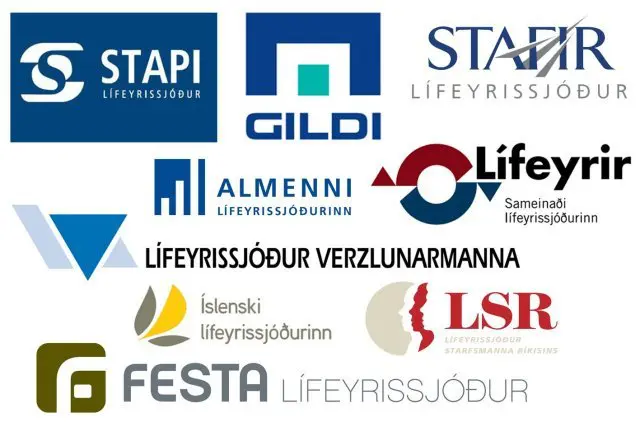
 Styrmir Gunnarsson directs questions to the Competition Authority in his article in Morgunblaðið on 5 July, entitled „Is „The New Class“ emerging in Iceland?“. The article discusses how pension funds have become the dominant owners of the country's largest companies. Among other things, it raises the question of whether it is correct that pension funds are the largest owners in Haga and also the largest owners in Kaupás, Haga's competitor.
On this occasion, Styrmir asks what the Competition Authority's view is on pension funds becoming dominant in the food market. He also asks what will be done to prevent them from colluding with one another.
On this occasion, it is appropriate to recall that the Competition Authority took a position on the changed ownership of Kaupás in decision no.. 7/2014, which is available on the authority's website. Regarding the ownership of pension funds, the decision states the following, among other things (p. 29 onwards):
„In cases where an investor has an ownership interest in two or more competitors in the same oligopolistic market, investors, etc. e.g. pension funds, can expect the Competition Authority to subject the ownership to special scrutiny and, where appropriate, to take action. The Authority has previously required a party to sell its shareholding in a competitor. In 2008, Orkuveita Reykjavíkur was required to reduce its shareholding in its competitor, Hitaveita Suðurnesja, to 31%. The decision (Decision No. 23/2008) was appealed, and the Competition Appeals Board upheld it in its ruling in case no. 7/2008, but stipulated that Orkuveita Reykjavíkur could retain a 10% stake. However, despite this decision by the appeal board, it must be noted that cases concerning minority stakes in competitors vary depending on the circumstances of each case. Thus, the circumstances of each case must be considered separately, for example, the structure of the relevant market and how voting rights have been exercised at shareholders' meetings. Therefore, ownership in more than one competitor, which is below 10%, may lead to a restriction of competition.
The above discussion suggests that pension funds and other investors should avoid holding competitively significant equity stakes in competitors operating in the same or related markets. This is particularly the case in markets with limited competition.
The limited investment options and size of pension funds investing in this country have been previously mentioned. For these reasons, it may become unavoidable for the same investors, pension funds, to hold an ownership stake in more than one company operating in the same market. The Competition Authority is aware of the problem arising from the limited investment options for pension funds and others, partly due to capital controls. The Competition Authority is also aware of the importance of reducing corporate indebtedness and injecting new equity into companies. Despite the importance of the above, caution must be exercised against the same parties holding a competitively significant stake in more than one competitor, particularly when these are strong companies operating in a duopoly.
Following the merger, Bekei will become the parent company of the subsidiaries. Among the subsidiaries is Kaupás, the second-largest player operating in the country's grocery market. Kaupás's main competitor is Hagar hf., which operates the Bónus and Hagkaup retail chains, among others. Samkaup hf. is also a major competitor in the market and operates stores under the Samkaup-úrval, Samkaup-strax and Nettó brand names, among others. There are also various smaller players operating in the market, such as Fjarðarkaup, Víðir and independent co-operative stores. The grocery market is a very important market for the general public, but the market is characterised by significant concentration and a lack of competition. For this reason, it is important to ensure, as far as possible, that active competition prevails in the market for the benefit of the general public. The Competition Authority considered it important to investigate whether the sale of Kaupás would pose a competition problem due to a minority stake in competitors.
The regulator's investigation into the merger revealed that one of the largest shareholders of SF V and SÍA II, the pension fund Gildi, would, following the merger, hold a competitively significant stake in two of the main competitors in the grocery market. However, during the course of the investigation, changes occurred in the shareholding of SF V, resulting in a reduction in Gildi's stake. In light of the changes in the shareholder group, the Competition Authority concluded that the same shareholder would not hold a competitively significant stake in two competitors in the food market. Nevertheless, some investors will end up owning smaller stakes in both Kaupás and Hagar following the merger.
In defining what constitutes a competitively significant stake in this context, reference is made, inter alia, to the fact that the stake in question gives the investor concerned the ability to demand the appointment of a director to the company in question. Particular regard is then had to the likelihood of attendance at shareholders' meetings.
The conditions attached to the transaction include provisions intended to limit, amongst other things, the risk of information being passed between competitors as a result of these ownership links, cf. in particular art. 1.2 of the decision on board membership and art. 1.7 on the provision of information to shareholders.“
The Competition Authority also had the opportunity to discuss these matters at a breakfast meeting hosted by the Business Council of Iceland, The Federation of Icelandic Businesses, the Federation of Icelandic Pension Funds and the Icelandic Trade Union Federation organised on 15 November 2013, a breakfast meeting on the position of pension funds in Icelandic business life. In my speech at the meeting, the following was stated, among other things:
„As banks have also been reducing their direct stakes, pension funds have been increasing theirs. They have done so both directly, through funds they own with other pension funds and some banks, or by participating in investment projects where the banks bring together their own interests and those of their clients. By mid-year, pension funds owned around 14% in the 120 companies we have been monitoring. Based on subsequent agreements, this stake has increased significantly, to at least 20%, and will most likely continue to grow. The combined stake of pension funds in listed companies on the Stock Exchange is between 40 and 50%.
This large share is partly due to the fact that investment options are currently scarce in this small market, which is closed off by capital controls. The pension funds are therefore big fish in an altogether too small pond, or perhaps we should say an aquarium.
Of course, there is nothing wrong with pension funds investing in companies in competitive markets. Investing in shares is part of their normal and necessary work, as pension funds are required to find ways to generate a return on contributions. Institutional investors are also prominent on the stock exchanges around us. And it can be consistent with both the long-term interests of the pension funds and the interests of competition for them to participate in strengthening the operating environment of companies by providing them with equity capital.
The problem, however, lies in the enormous weight of pension funds in the current and foreseeable ownership of businesses. The result has, in some cases, and will in more cases be, that multiple pension funds together come to hold a majority stake in important competing companies. As it is not in the nature of pension funds to run businesses, their ownership, unless changed, is generally ineffective and their ownership oversight therefore unclear.
The situation becomes even more unclear when one considers that a portion of pension fund investments is channelled through private equity funds, often with the involvement of banks which frequently also have a stake in the companies in question and, moreover, have a variety of interests in their operations, both as investment banks and as commercial banks.
The consequence of all the above could be that the ownership of important businesses becomes opaque, in particular as to whether and, if so, who controls the company or how ownership influence is exercised. This creates a risk that businesses will not have owners who drive healthy operations and make the company a competitive force in the market. This, combined with the precarious position of many companies and the current economic climate, could lead to a failure to increase productivity here through effective competition, ultimately leaving us facing a lost decade, similar to the one the Japanese experienced following the crisis there in the early 1990s.
It is with this in mind that the Competition Authority considers there is a pressing need to pause and consider the direction in which ownership of important businesses is developing from a competition perspective. As a contribution to that discussion, I will now set out and justify several assertions relating to the ownership of businesses by pension funds. They are presented here for discussion purposes, but the Competition Authority has not taken a final position on all of them. Nor are they exhaustive of the Authority's position on these matters.“
The speech then went on to outline and explain in more detail six assertions or principles that needed to be considered and taken a position on, including in the context of pension funds. They are as follows:
For further details on this, please refer to the speech, which is available on this website. Competition Authority.
Páll Gunnar Pálsson
Director-General of the Competition Authority
"*" indicates required fields