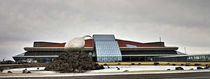
 The background to the case is that Wow air complained to the Competition Authority about the procedure for allocating handling slots at Keflavik Airport. Turnaround time refers to the time allocated to airlines at airports to land and disembark passengers, receive necessary ground handling, board passengers and take off again.
An investigation by the Competition Authority revealed that the arrangement had a detrimental effect on competition and prevented new entrants from entering the scheduled flight market from Iceland.Decision 25/2013). The arrangement effectively meant that Icelandair, the largest competitor, had priority for almost all of the most important slots at the airport. This also applied to the allocation of new handling slots resulting from changes that had led to an increase in the number of handling slots at the airport. The arrangement was therefore likely to cause harm to air passengers. In order to promote competition, the Competition Authority therefore issued specific instructions to Isavia, which manages the airport.
Neither Isavia nor Icelandair were satisfied with the decision of the Competition Authority and appealed its decision to the Competition Appeals Board. In its ruling, the appeals board concluded that the individual whom Isavia had appointed to act as a coordinator for the allocation of flight handling slots held independent administrative authority under Icelandic law (Ruling 11/2013Isavia therefore had no authority to interfere with his work. The decision of the Competition Authority was therefore overturned.
On this basis, Wow air brought a case before the Reykjavík District Court seeking to have the decision of the Competition Appeals Board annulled. The District Court decided to seek an advisory opinion from the EFTA Court.
With the judgment of the EFTA Court of 10 December 2014 (Case E-14/18) var staðfest að samkeppnisyfirvöld gætu haft afskipti af samkeppnishindrunum sem leiddu af úthlutun afgreiðslutíma. Með dóminum var því slegið föstu að svonefndur hefðarréttur (e. grandfather rights) á afgreiðslutímum kæmi ekki í veg fyrir íhlutun samkeppnisyfirvalda. Á grundvelli hefðaréttar hefðu flugfélög sem áður nutu mikilla forréttinda (e. flag carriers) haft yfir að ráða mikilvægustu afgreiðslutímunum. Í málinu var því haldið fram að flugfélög ættu óskoraðan rétt á því að halda afgreiðslutímum sem þau fengju úthlutað á grundvelli hefðarréttar, þ.e. hefðu áður sýnt fram á 80% nýtingu á úthlutuðum afgreiðslutímum. Með dómi EFTA-dómstólsins var hins vegar staðfest að samkeppnisyfirvöld geta engu að síður gripið til aðgerða í slíkum tilvikum.
The judgment of the EFTA Court also states that one of the main objectives of the EEA Agreement is to establish a system which ensures that competition is not distorted. It is stated that by Regulation (EEC) No. 95/93, on the allocation of slot times at Community aerodomes, seeks to facilitate the allocation of slot times to new operators, in particular by requiring that 50% of the slot times be reserved for them.
The regulation does not affect the powers of public authorities to require that handling slots are transferred between air operators and to control how they are allocated in accordance with national competition law or the competition rules of EEA law. In such cases, however, the competition authorities should direct their instructions to the airline operator and not to the airport authority.
By the time the EFTA Court's judgment was delivered, the period covered by Wow air's application had passed. Therefore, there was no longer any basis for allocating handling slots to Wow air on the basis of the application. Referring to this and other points, the district court considered that Wow air no longer had a legitimate interest in obtaining a court ruling on its claim to have the decision of the Competition Appeals Board annulled.
"*" indicates required fields