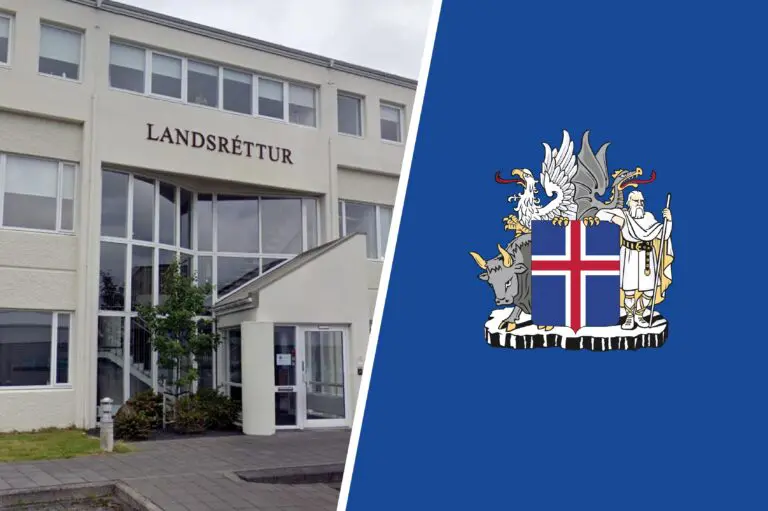
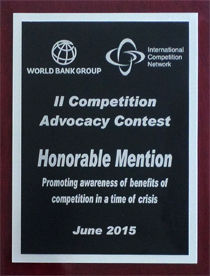
 At a meeting of the World Bank held in Washington on 23 June, the Competition Authority was recognised for its contribution to the recovery of the Icelandic economy following the 2008 financial crash and the application of competition law during times of crisis. The recognition is particularly concerned with how the Competition Authority has applied its guidance and advocacy role for this purpose.
The award is part of supporting the enforcement of competition law worldwide. It is a joint project of the World Bank and the International Competition Network, with the participation of the Organisation for Economic Co-operation and Development (OECD).
The judging panel considered it particularly exemplary how the Competition Authority responded after the 2008 crash; by seeking cooperation with market players, academics and public bodies, to promote the opening up of markets and prevent or reduce barriers to entry. The jury considered this important, as competition law has often been set aside during times of crisis, which has invariably deepened and prolonged the crisis. The institution therefore received the award for its guidance and advocacy, which involved boldness and new methods in encouraging the use of competition law as a tool for economic recovery during a time of severe crisis.
Páll Gunnar Pálsson, CEO:
The recognition is an incentive for the Competition Authority to do even better. This applies both to the Authority's guidance role and its firmness in the enforcement of competition law.
The award was presented at a meeting held under the title „Promoting effective competition policy Shared prosperity and inclusive growth“. Esteemed academics in the field of competition policy, representatives from the private and public sectors, and competition authorities from around the world were in attendance. The discussion focused on how best to apply competition law to increase prosperity and productivity, and in particular the importance of using competition law in the fight against global inequality and poverty.
Nearly forty presentations were delivered at the conference. Among other things, various studies from recent years were reported which confirm that competition law and its application are one of the world's main tools in the fight against poverty and inequality. By opening markets, reducing barriers to entry and cutting red tape, it is possible to increase household disposable income and break the cycle of poverty. The harm caused by breaches of competition law, or by public authorities obstructing its application, has also led to an unhealthy economy characterised by stagnation and low innovation.
The discussion at the meeting centred not least on the important balance between, on the one hand, the enforcement of the law against infringements and, on the other, how to raise awareness among the public, market participants and governments of the law's importance. While guidance and promotion of competition law are important, all research also shows that breaches of competition law are costing the world economy tens of billions of dollars annually. It is therefore necessary to enforce the law firmly, whilst simultaneously increasing awareness and knowledge of it.
"*" indicates required fields