 The article in PDF document – Opens in a new window
Information page on changes to price labelling
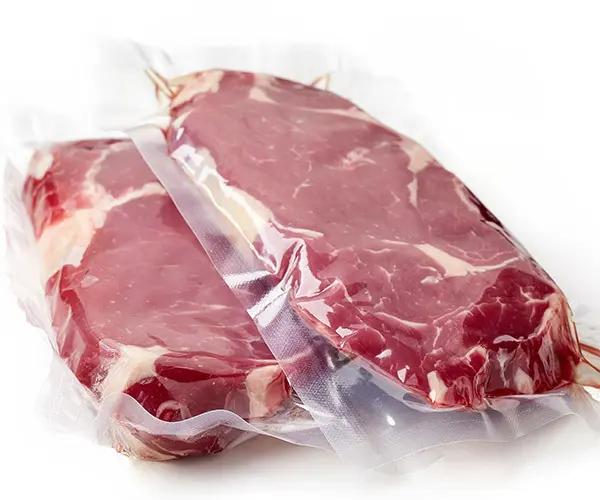
On 1 March, changes to the labelling of various meat products in supermarkets will come into effect. The changes involve meat processing companies ceasing to pre-price standard-weight packs for supermarkets, including most types of sausages, ready meals and most types of cold cuts. Pre-labelling refers to when a meat processing company or other suppliers label products with the retail price used by a shop, making the price part of the information on the supplier's label.
From 1 June, the same will apply to meat products that are not of a standard weight, such as lamb racks, tray-packed chicken breasts, etc. From this point on, pre-packaged labelling of meat products will therefore largely be a thing of the past.
These changes are part of ending and combating the breaches of which Hagar and certain meat-processing companies were found guilty. It is appropriate to briefly outline the circumstances leading to this.
Decision no. 33/2010 reports on restrictions on competition in relation to the pre-labelling of meat products. The decision is the result of an investigation that was launched following a report published by the Competition Authority in mid-2008 on the commercial agreements between suppliers and supermarkets. It argued that pre-labelling restricted competition.
The investigation into the case revealed anti-competitive price-fixing between, on the one hand, the Bonus stores owned by Haga, and on the other, six meat processing companies. The companies did this through bilateral agreements or concerted practices in relation to the retail pricing of meat and processed meat products handled by the meat processing companies (so-called pre-labelling).
Provisions of competition law prohibit manufacturers and retailers from consulting with each other on resale prices (vertical price-fixing). Emails and other evidence showed that Bónus, on the one hand, and the six meat-processing companies (each individually) on the other, had close cooperation regarding retail prices at Bónus and discounts from them. In most cases, the communication was such that the meat processing companies would send Bónus a proposal for a retail price for certain products and a discount from that price. Bónus's representatives would then respond by accepting the offer, rejecting it, or making a new proposal.
These interactions therefore involved not only a request from Bonus for the meat suppliers' product labelling, but the collaboration proved to be much more extensive. The infringements were intended to restrict competition and thus cause harm to consumers.
In many cases, these parties were negotiating or discussing discounts from a price that was never intended to be offered to consumers in the relevant stores.
 Husbandry and meat processing companies sought an agreement
After the Competition Authority had presented its preliminary findings to the companies in question, they each individually approached the Competition Authority and requested to settle the matter. On that basis, the Competition Authority exercised its powers under the Competition Act and reached a settlement with Haga and six meat processing companies. In total, they paid 405 million krónur in administrative fines.
Two other meat processing companies requested settlement talks with the Competition Authority, but these discussions did not produce a result. These companies are therefore still under investigation.
In order to prevent further infringements and create the conditions for increased competition, the companies in question agreed to comply with certain instructions and conditions.
One of these conditions is that Haga will stop accepting pre-labelled meat products within the timeframe specified at the beginning of the article. Likewise, the respective meat processing companies will stop marking up retail prices for their customers. The change therefore affects all meat processing companies that do business with Haga and other grocery stores besides those run by Haga, which purchase products from the aforementioned meat processing companies.
According to the decision, Högum is also prohibited from offering discounts on meat products unless it represents a genuine reduction from the current retail price. It is clear that it is both anti-competitive and misleading for consumers to suggest that a product is on offer (e.g. a 10% discount) when, in reality, it is simply being sold at the standard price normally charged in that store. With this decision, these business practices are to become a thing of the past.
The Competition Authority has stressed the importance of the changes being implemented successfully. The responsibility for this lies with the companies involved. It is to be expected that they will seek to implement the changes in such a way that consumers are not inconvenienced. Despite this, the Competition Authority has received complaints from dissatisfied consumers about pricing in the run-up to the changes. The Competition Authority has passed these complaints on to the Consumer Authority.
The Competition Authority has also urged business and consumer interest groups, and the relevant government bodies, to implement the changes with the interests of consumers as a guiding principle.
The Competition Authority expects that consumers will therefore not have to experience any inconvenience as a result of the changes. On the contrary, they are expected to lead to increased competition between shops and healthier competitive conditions in the long term.
 Information page opens
In connection with the above-mentioned changes, the Competition Authority is today opening an information page on its website, www.samkeppni.is, where you can find frequently asked questions from consumers and businesses, and their answers. The information page will be updated as and when necessary. The questions and answers currently available on the page are also provided below.
Páll Gunnar Pálsson
Director-General of the Competition Authority
"*" indicates required fields