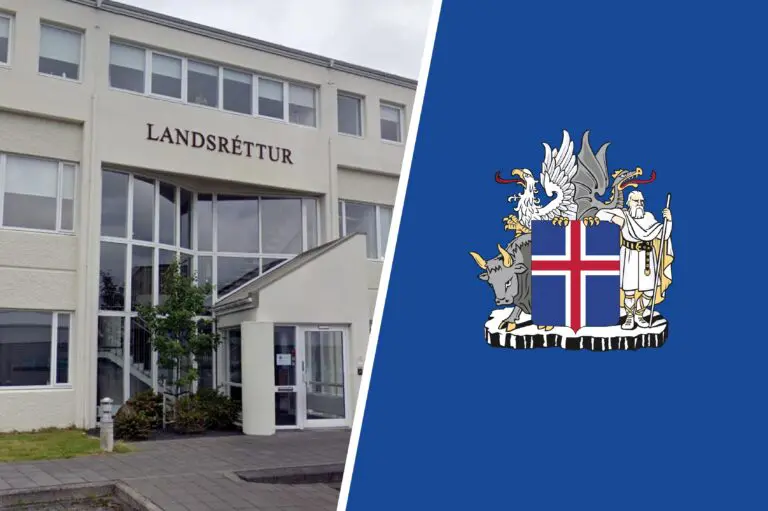
 On 9 February, a fell Verdict in the Supreme Court of Iceland, where it was confirmed that Icelandair had abused its dominant market position on the flight route between Keflavik and Copenhagen. The company was fined 80 million krónur. This concerned the promotion and sale of so-called 'Netsmells', which were available to Icelandair's customers in 2004. The District Court had previously upheld the competition authorities' finding of an infringement by Icelandair but quashed the fines.
The Supreme Court's judgment includes a precedent that is important for smaller and new competitors in passenger aviation to and from Iceland. It is a confirmation that a dominant player in passenger aviation must be careful not to restrict market access through the promotion and pricing of airfares.
Furthermore, it is important that the judgment confirms the principle that fines should be imposed for breaches of the prohibition provisions of competition law, including the prohibition on the abuse of a dominant position. The Supreme Court also took into account that Icelandair had previously breached the same prohibition provision.
There is no doubt that the state of competition in the aviation market is of great importance to business and the public in this country. The aforementioned judgment is a good opportunity to outline some instances where competition authorities have intervened to remove barriers to competition in aviation markets in recent years.
The Competition Appeals Board upheld the infringements but reduced the fines to 60 million krónur. The case was brought before the Reykjavík District Court, which upheld the appeal board's ruling. The Supreme Court also upheld the infringements but reduced the fines to 40 million króna.
Currently, two airlines offer year-round flights to and from Iceland, in addition to which a third airline has announced operations. Further airlines offer seasonal services. One reason for this is that airlines have a choice of handling agents, and the services provided by the aviation authorities are gradually improving. This represents a significant change in a few years, from a situation where a single airline held sway and enjoyed various forms of government support.
This change is largely thanks to those who saw an opportunity to offer new options and had the courage to implement them. It is equally clear that these attempts would in many cases have failed if the Competition Act had not been in force and enforced.
However, much remains to be done. It should be noted that in the report of the Competition Authority No. 2/2008, Robust development – The opening of markets and the promotion of business activity, which includes a special focus on aviation markets. Various barriers to entry into these markets are identified, along with ways to remove them. While some progress has been made in this area, other issues remain. It is expected that the Competition Authority will take further action in this regard.
The Supreme Court judgment mentioned at the beginning was delivered exactly eight years after Iceland Express complained about Icelandair's pricing. The competition authorities concluded the case in 2007, three years after the complaint was made. The case has therefore been before the courts for around five years, where various issues concerning its substance and handling have been tested. The case was tried twice in the district court, but on the first occasion the Supreme Court quashed the district court's judgment.
The handling of the case is therefore a good example of how fiercely competition law cases are often contested and how complex they can be.
This lengthy procedure also brings to mind that the decisions of competition authorities do not always fully benefit the complainant themselves, although, thankfully, there are numerous examples of them having prevented competitors from being driven out of the market.
It is understandable that a competitor who complains to the competition authorities wants to see the matter resolved quickly. The reality, however, is that competition law and its enforcement are not aimed at saving companies from all forms of harm caused by barriers to competition, but rather at stopping infringements and creating a better competitive environment for the future. to the benefit of the economy and the public.
On the other hand, a final ruling in a competition case can give competitors grounds to claim damages from the company that breached competition law and caused them harm. There are several examples of this in Iceland. Companies and consumers have sought damages from the oil companies for illegal collusion that was exposed by the competition authorities. More cases of a similar nature have been under consideration by parties who believe they have been wronged.
Páll Gunnar Pálsson
Director-General of the Competition Authority
"*" indicates required fields